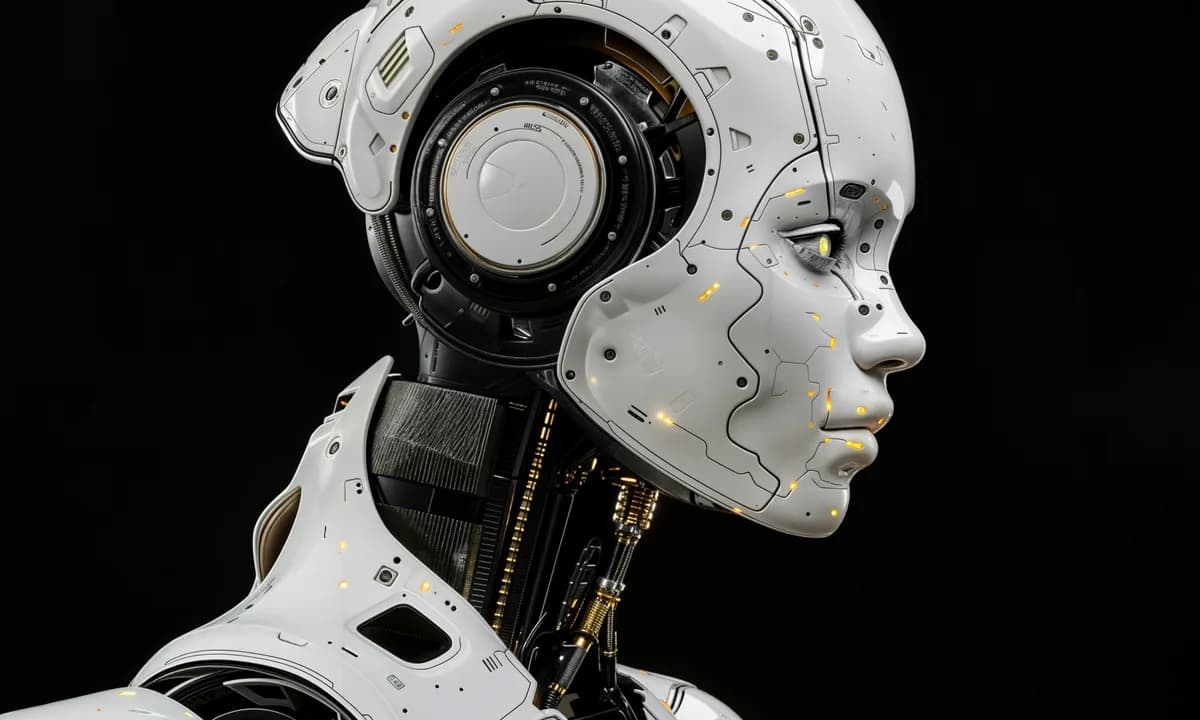
Beyond the Hype: What Humanoid Robot Builders Admit About the "Robot Butler" Dream
Before you pre-order that robot butler Elon Musk promised, listen to the people actually building them. CEOs from Boston Dynamics, Agility Robotics, and Apptronik admit that while humanoid robots are advancing rapidly, the dream of a domestic helper is decades away due to safety and reliability issues.
Elon Musk has a vision: a near future where humanoid robots are as common as cars, costing perhaps $20,000 to $30,000, ready to fold our laundry and cook our dinner. It’s a tantalizing prospect that tech enthusiasts and startups are eager to buy into.
But if you ask the people actually bending the metal and coding the brains of these machines, the timeline for "Rosie the Robot" arriving in your kitchen looks very different.
At TechCrunch Disrupt 2024, a panel of industry heavyweights—Melonee Wise of Agility Robotics (makers of Digit), Robert Playter of Boston Dynamics (makers of Atlas), and Jeff Cardenas of Apptronik (makers of Apollo)—offered a sobering, yet mature, reality check on the state of humanoid robotics.
The consensus? The robot revolution is here, but it’s wearing a hard hat, not an apron. Before you pre-order a robotic butler, it is crucial to understand the massive engineering and safety chasms that still exist between a viral video of a robot doing parkour and a machine you can trust around your family.
The Great Disconnect: Domestic Dreams vs. Industrial Reality
The gap between public perception and engineering reality in humanoid robotics is widening, fueled by aggressive marketing and sci-fi expectations. While the ultimate goal for many is a general-purpose domestic helper, the builders admit that goal is currently out of reach.
Melonee Wise, Chief Product Officer at Agility Robotics, didn't mince words on the panel, stating the industry is "very far away" from deploying robots in homes. The fundamental issue isn't just capability; it's trust and safety in unstructured environments.
The home is chaos. Lego bricks on the floor, pets running unpredictably, and children whose movements defy algorithms create an environment infinitely harder to navigate than a structured warehouse. Wise framed the safety challenge perfectly:
"If I can’t trust my robot to be around my cat, I can’t trust it to be around my child."
Until a 200-pound metal humanoid can reliably distinguish between a toy and a toddler—and fail safely every single time—it is not entering the living room.
The "Brownfield" Opportunity
If not the home, then where? The panelists agreed that the immediate, viable future for humanoids lies in industrial "brownfield" sites.
These are existing facilities—warehouses, manufacturing plants, logistics hubs—that were specifically designed for human workers. They have stairs, narrow aisles, and shelves at human height.
- Agility Robotics and Apptronik are aggressively targeting these spaces. They aren't trying to replace humans entirely; they are trying to slot robots into workflows where wheeled robots fail because the environment wasn't built for wheels.
- The goal is to alleviate human labor shortages in dull, dirty, or dangerous jobs within environments that already exist, rather than forcing companies to build new, expensive automated factories from scratch.
The Convergence: Why This Is Happening Now
If domestic use is decades away, why is there a massive surge in humanoid robot development right now? The current explosion is due to the convergence of two factors: maturing hardware and the rise of generative AI.
For decades, robots were either smart brains trapped in useless bodies, or capable bodies with no intelligence. That is finally changing.
1. Hardware Reliability over Viral Tricks
Boston Dynamics is famous for videos of its hydraulic Atlas robot performing backflips. Yet, they recently retired the hydraulic model in favor of a fully electric version.
Why? Reliability. Robert Playter, CEO of Boston Dynamics, highlighted that while hydraulics offered immense power for impressive demos, they aren't practical for real-world commercial deployment due to maintenance and energy leaks. An electric Atlas is quieter, stronger, and crucially, more reliable for day-to-day operations. The industry is moving past "stunt bots" toward commercial viability.
2. The AI Brain
The arrival of large language models (LLMs) and generative AI has provided the "brain" these bodies were missing. The ability for a robot to understand natural language commands and generalize tasks is the missing link.
However, Playter cautioned that while AI speeds up the learning process for robots, true "generalized intelligence"—a robot that can walk into a totally new environment and figure out what to do like a human can—remains a massive hurdle.
"We’re not going to solve generalized intelligence in the next five years," Playter admitted. The integration of AI is accelerating progress, but it hasn't magically solved the fundamental challenges of robotics that teams have been battling for decades.
Expert Perspective: The Necessary "Adults in the Room"
Analyzing the statements from Wise, Playter, and Cardenas reveals a critical dynamic in the current tech landscape: the tension between hype-driven funding and sustainable engineering.
The unique angle here is that these CEOs are actively trying to de-hype their own sector. In the startup world, where "fake it 'til you make it" is often the norm, this level of transparency is rare—and necessary.
They are managing a delicate balance. They need the excitement generated by figures like Musk to attract the billions of dollars required for R&D. Yet, they know that if the public expects a $20,000 butler in 2026 and gets a $150,000 warehouse logistics bot instead, the resulting disillusionment could crash the entire sector (an "AI winter" for robotics).
By positioning themselves as the "adults in the room," focusing on industrial safety standards, reliability over backflips, and incremental progress, they are trying to build a foundation for a real industry, rather than a vaporware bubble. They are admitting that the path to the robot butler runs through years of unglamorous work on factory floors.
The Bottom Line
The age of the humanoid robot has begun, but don't clear a space in your closet just yet.
The insights from the TechCrunch Disrupt panel reported by Digital Trends make it clear: the technology is advancing rapidly, fueled by the convergence of better electric hardware and generative AI brains. But the application is strictly commercial for the foreseeable future.
The builders of these machines are focused on creating reliable colleagues for warehouse workers, not domestic servants for homeowners. The robot butler isn't a lie, but it is a long-term vision that will only be realized after these machines master the controlled chaos of the industrial world first.
Stay informed
Get our latest articles delivered to your inbox.
Related Articles
chatgpt: The Complete Guide to Using chat gpt for Free, Login, Images, and Everyday Productivity
This complete guide explains what chatgpt is, how chatgpt login works, what you get with chatgpt free, and how to use it safely for business, tech, and everyday tasks.
Why OpenAI’s “Non-Influential” ChatGPT Ads May Matter More Than the Company Admits
Shortly after OpenAI confirmed that advertising is coming to ChatGPT, a predictable question followed: Will money change the answers?
The End of the Prompt Box: How Anthropic’s ‘Cowork’ OS Is Automating the White-Collar Grunt
The era of the passive chatbot is over. We analyze Anthropic’s new "Claude Cowork," an operating system layer that doesn't just answer questions—it takes over your mouse and keyboard to sort files, extract data, and finish your reports while you sleep.
The Safety Valve Is Off: Musk, Grok, and the Billion-Dollar Bet Against the World
Elon Musk’s Grok Is Under Fire Worldwide Over Illegal Images— But Musk Is Defiant