Nex Playground vs. The "Wii Problem": How a Subscription Model is Reviving Active Family Gaming
The Nintendo Wii conquered the world but failed to keep its casual audience buying games—a flaw known as the "Wii Problem." Now, the Nex Playground is outselling Xbox by fixing that fatal error. We explore how this dark horse console is using a subscription-first model to revive family fitness gaming and why it dominated Black Friday sales.
The Nintendo Wii changed the world in 2006. If you were alive then, you remember it. Grandmothers bowling in nursing homes, parents sweating over Wii Fit balance boards, and a plastic white box sitting under televisions that had never known a video game console before. It was a cultural phenomenon that expanded the gaming market faster than anyone thought possible.
But behind the motion-controlled magic, there was a flaw—a silent killer that industry insiders call the "Wii Problem."
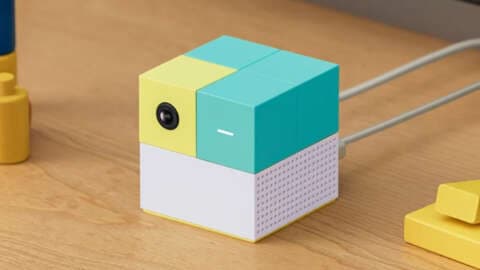
Now, nearly two decades later, a dark horse has emerged from the shadows to claim the mantle of family fitness gaming. The Nex Playground, a console you might not have heard of until recently, is making headlines for outselling Xbox and claiming a massive chunk of Black Friday sales. According to Nex CEO David Lee, their success isn't just luck; it’s a calculated strategy designed to solve the very structural issue that eventually stalled the Wii’s momentum.
In this deep dive, we explore how Nex Playground is rewriting the rules of casual gaming, why it’s beating industry titans in sales, and whether its subscription-first model is the sustainable future that the Wii never had.
The "Wii Problem": A Golden Cage
To understand why Nex Playground is making waves, we first have to understand the ghost it is trying to exorcise.
In a recent interview, Nex CEO David Lee offered a candid diagnosis of Nintendo’s motion-control era. "Nintendo expanded the audience with Wii," Lee explained. "When you expand the audience, and they want different things, and they only buy Wii Fit, Wii Sports and not many others … that's a bit of a problem."
The "One-Hit Wonder" Effect
The Wii sold over 101 million units, a staggering hardware success. However, the economics of the video game industry rely heavily on what is known as the "attach rate"—the number of games sold per console.
- Hardcore Gamers: Buy a PS5 or Xbox and purchase 5, 10, or 20 games over the console's lifecycle.
- Casual Wii Audience: Bought the console for Wii Sports (which was often included) and maybe Wii Fit. And then? They stopped buying.
For Nintendo and third-party developers, this was a disaster in disguise. You had millions of active consoles, but their owners weren't customers—they were tourists. They had their bowling simulator, and they didn't need anything else. This lack of software sales made the ecosystem difficult to sustain long-term, leading to the "dusty console" syndrome where Wiis sat unused for years once the novelty wore off.
David Lee argues that this model was "not sustainable." The hardware was successful, but the business model failed to monetize that massive, newfound audience continuously.
The Nex Solution: Gaming as a Service
This is where the Nex Playground pivots. Instead of relying on a grandmother to drive to GameStop and pay $50 for a new disc she might not like, Nex has embraced the modern subscription model.
"One of the most important things we should do is learn from history and try not to commit the same limitations," Lee told The Game Business. By offering titles as part of a service rather than individual products, Nex removes the friction of purchase.
Why Subscriptions Fix the "Casual" Dilemma
For the casual family audience, the barrier to entry for a new game is high. They don't read reviews on IGN; they don't watch Twitch streams. They are risk-averse.
- The Wii Model: "Pay $50 for this game. If you don't like it, you wasted your money."
- The Nex Model: "You are already subscribed. Try this new dance game. If you hate it, try the tennis game. It costs you nothing extra."
This shift serves the customer "continuously with new innovations," according to Lee. It keeps the hardware relevant and the users engaged. It transforms the console from a one-time purchase into a living platform—a "Netflix for Active Play."
The Dark Horse: Nex Playground’s Shocking Market Performance
You might be tempted to dismiss Nex Playground as a niche gadget, but the numbers tell a different story—one that should worry Microsoft and Sony.
Data reveals that the Nex Playground had a breakout performance in November 2025. In a shocking upset, this "dark horse" console:
- Finished in 3rd place in overall console sales, beating the entire Xbox family of systems.
- Captured 14% of all console sales on Black Friday.
Interpreting the Data
What does it mean when a motion-gaming cube beats the Xbox Series X|S during the biggest shopping week of the year?
It signals a massive, unserved appetite for family-friendly, active social gaming. The PlayStation 5 and Xbox are fighting a bloody war for the "hardcore" demographic, obsessing over ray-tracing, frame rates, and grim-dark narratives. Meanwhile, families are looking for something they can play together in the living room without navigating complex controllers or violent themes.
The Nintendo Switch is entering its twilight years, and the Switch 2 is on the horizon but not here yet. Nex Playground has stepped into that vacuum, capitalizing on the same "Blue Ocean" strategy that Nintendo pioneered, but arming it with a modern recurring revenue model.
Standing on Giants' Shoulders
Despite the critique of the Wii's business model, David Lee’s commentary is rooted in deep respect for what Nintendo achieved.
"We are standing on a giant's shoulder," Lee admitted.
This acknowledgment is crucial. Nex Playground isn't trying to invent a new behavior; it is trying to perfect a behavior that Nintendo validated. The Wii proved that people want to move. They want to swing a virtual racket. They want technology that gets them off the couch.
The failure of the Wii wasn't the gameplay; it was the monetization. By decoupling the fun of motion gaming from the friction of retail software sales, Nex attempts to honor the Wii’s legacy while fixing its fatal flaw.
Expert Perspective: The "Hardware-as-a-Gateway" Shift
This section provides an analytical takeaway on the broader industry implications of Nex’s strategy.
The Bottom Line: The success of Nex Playground proves that the "Console War" is no longer a binary battle between high-fidelity graphics and exclusive blockbusters. We are seeing a fragmentation of the market into "Immersion" vs. "Activity."
The "Wii Problem" was ultimately a problem of engagement retention. Casual audiences are fickle. By locking them into a subscription, Nex solves two massive problems that plagued the Wii:
- Discovery: On the Wii, good indie games died because casual users wouldn't buy them. On a subscription service, those games can be surfaced and played instantly, increasing the value of the device.
- Churn: When you buy a game and beat it (or get bored), you stop playing the console. With a subscription, the content library grows. The promise of "new stuff next month" keeps the device plugged in.
However, the risk remains. Subscriptions are only as good as their content pipelines. The Wii died because the software drought eventually became too severe. Nex Playground’s challenge will not be selling the hardware—they’ve clearly proven they can do that—but in maintaining a content cadence that justifies a monthly fee for users who aren't "gamers" in the traditional sense. If the content dries up, the subscription gets cancelled, and the Nex Playground becomes just another dusty relic under the TV.
But for now? They have found a market inefficiency that Microsoft and Sony ignored, and they are capitalizing on it beautifully.
Conclusion: A New Era for Living Room Fitness?
The Nex Playground is more than just a holiday sales anomaly. It is a case study in how to iterate on history. By identifying the "Wii Problem"—the inability to monetize a massive but casual user base—and applying a modern subscription fix, Nex has carved out a lucrative niche in a crowded market.
For families, it offers a low-risk way to game together. For the industry, it offers a warning: Ignore the casual market at your peril.
As we move into 2026, the question isn't whether Nex can compete with the PS5—it’s not trying to. The question is whether it can hold onto this momentum and turn those Black Friday buyers into long-term subscribers.
What do you think? Is the subscription model enough to keep you playing active games, or do you prefer owning your physical copies? Does the Nex Playground really have what it takes to succeed where the Wii eventually faded?
Stay informed
Get our latest articles delivered to your inbox.
Related Articles
britannica review
Is britannica worth visiting today? From addictive daily word games to verified historical deep-dives, read our full review of the modern encyclopedia.
The Honeymoon is Over: Threads Just Turned on the Money Printer
Did you really think Mark Zuckerberg was running a charity? Of course not.
Samsung’s Android XR Glasses 2026: 12MP Camera, Dual Models, and the Fight for Your Face
Samsung is finally entering the smart glasses arena in 2026. New leaks reveal the upcoming Android XR glasses will feature a 12MP camera, deep Gemini AI integration, and a dual-model strategy to rival Meta’s Ray-Bans. Here is everything we know about the specs, the "Pro" variant, and why this could be the ultimate Android accessory.
[modo.us] Review: Is It Actually Useful or Just Hype?
Is Modo.us the best new social casino or just another coin trap? We spent two weeks testing the "Live Dealer" tables and grinding daily bonuses to see if the payouts are real—and if the $100 cash-out limit is a dealbreaker for casual players.