‘Uninvestable’: Trump pitch to oil execs yields no promises
Despite the dramatic capture of Nicolás Maduro and a White House push for a $100 billion investment to flood the market with cheap crude, US oil titans like ExxonMobil are rejecting President Trump's Venezuela pitch. The verdict? Without massive legal and economic reforms, the world's largest oil reserves remain "uninvestable.”
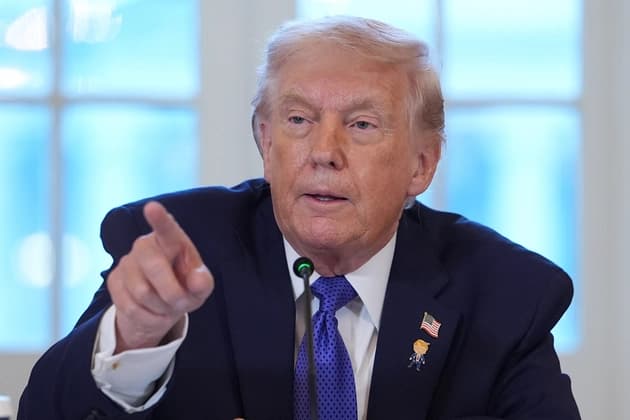
The air in the Cabinet Room was thick with the scent of opportunity and the friction of reality. On Friday, President Donald Trump sat across from the titans of the American energy sector—ExxonMobil’s Darren Woods, Chevron’s Mike Wirth, and others—and offered them the keys to the world’s largest oil reserves. His pitch was characteristically bold: a “clean slate” for Venezuela, backed by US security guarantees, in exchange for a $100 billion investment to flood the global market with crude.
It should have been a victory lap. Just six days prior, US forces had detained Nicolás Maduro in a daring raid, decapitating a regime that had long been a thorn in Washington’s side. But instead of checkbooks opening, the room grew cold.
“If we look at the legal and commercial constructs in place today in Venezuela, today it’s uninvestable,” Woods told the President.
That single word—uninvestable—shattered the administration's narrative. It wasn't just a negotiation tactic; it was a verdict. While the White House dreams of $50 oil, the industry sees a money pit wrapped in a legal minefield. The disconnect between Pennsylvania Avenue and the C-Suites of Houston has never been wider, and the stakes—for the US economy, the Permian Basin, and global energy markets—could not be higher.
The Economics of "Drill, Baby, Drill" (in Caracas)
The fundamental problem with Trump’s plan isn't political; it’s arithmetic. The President’s stated goal is to lower global oil prices to roughly $50 per barrel to ease inflation for American consumers. Yet, he is asking US majors to fund this price collapse by investing in one of the most expensive oil patches on earth.
Venezuelan crude is not the light, sweet bounty of the Texas Permian. It is extra-heavy sludge, requiring massive, energy-intensive “upgraders” to process. According to data from Rystad Energy and Wood Mackenzie, the breakeven price for new Venezuelan projects in the Orinoco Belt is currently hovering around $80 per barrel.
Do the math:
- Trump’s Target Price: $50/bbl
- Venezuela Production Cost: ~$80/bbl
- Result: A guaranteed loss of $30 on every barrel produced.
“The math doesn't work,” says Ed Hirs, an energy economist at the University of Houston. “No oil company is going to invest money in a losing venture.” Trump is effectively asking Exxon and Chevron to subsidize American drivers by burning their own shareholder capital.
The $10 Billion Ghost at the Table
Beyond the brutal unit economics, there is the issue of unpaid bills. The President’s offer of a “clean slate” glosses over a decade of expropriations.
- ConocoPhillips is still owed approximately $8.7 billion (swelling to nearly $9 billion with interest) after Hugo Chávez seized their Hamaca and Petrozuata assets in 2007.
- ExxonMobil has outstanding arbitration awards totaling roughly $1.6 billion.
When Trump told executives, “You’re dealing with us directly, not Venezuela,” he implied Washington could wave a wand and erase these liabilities. But corporate boards have long memories. Without a binding legal framework that guarantees repayment of past debts and immunity from future seizures—specifically the removal of the 60% windfall profit tax embedded in Venezuela’s hydrocarbon laws—no fiduciary will sign a check.
As Woods bluntly put it, re-entering without these changes would require “ignoring history.”
The Shale Cannibalization Paradox
Here lies the contrarian truth that few in the administration are discussing: Success in Venezuela would be a disaster for Texas.
The US shale revolution is built on a delicate price floor. Most producers in the Permian Basin need oil to trade above $60–$65 per barrel to remain profitable and maintain drilling activity.
If Trump’s plan succeeds—if Venezuela miraculously ramps up production to 2 or 3 million barrels per day—the resulting supply glut would crash prices well below that $60 threshold.
- The Result: A boom in Venezuelan output would directly trigger layoffs, rig shutdowns, and bankruptcies in Midland and Odessa.
- The Irony: An “America First” energy policy that prioritizes Venezuelan production effectively outsources US energy dominance to South America.
Jasen Gast, CEO of Oilfield Service Professionals, calls it a “stress test for the American shale model.” An influx of heavy Venezuelan crude competes directly for Gulf Coast refining capacity, potentially displacing domestic barrels and eroding the US energy independence hard-won over the last decade.
Conclusion: The Long Road to Nowhere
The capture of Maduro was a geopolitical earthquake, but rebuilding his country’s oil sector is a geological and economic slog. Venezuela’s infrastructure is rotting—pipelines are rusted, skilled labor has fled, and the power grid is on the brink of collapse. Restoring production to 1990s levels is a $100 billion, 15-year project, not a quick fix for 2026 gas prices.
President Trump wants a ribbon-cutting ceremony. The oil industry wants a return on investment. Until those two desires align—or until the laws of physics and economics change—Venezuela’s vast reserves will remain exactly where they are: in the ground, and uninvestable.
This video provides the direct context of the White House meeting where Darren Woods delivered his "uninvestable" assessment.
Stay informed
Get our latest articles delivered to your inbox.
Related Articles
Artemis II Explained: Why NASA’s Next Moon Mission Won't Touch the Lunar Surface
Discover why NASA is choosing a flyby over a landing and how this high-stakes test drive paves the way for a permanent lunar presence.
Audio’s Red Carpet Moment: The Golden Globes Finally Bend the Knee to Podcasting
The Golden Globes have finally added a podcast category, signaling a massive shift in Hollywood's hierarchy. Here is why this isn't just about trophies—it's about the industry's obsession with audio IP as the new gold rush.
The Caliphate Ghost: Why the US Just Dropped 40 Tons of Ordnance on a "Defeated" Enemy
The US military's latest airstrikes in Syria aren't just about neutralizing ISIS remnants—they expose a fragile containment strategy teetering on the edge of failure. Here is why Washington is still dropping bombs on a "defeated" enemy seven years later.
The Man Who Skated Through the Apocalypse: Why T.K. Carter Mattered
T.K. Carter, best known as the boombox-toting Nauls in John Carpenter’s sci-fi classic The Thing, has died at 69. A career chameleon who moved effortlessly between sitcom warmth and gritty drama, Carter defied the "expendable" tropes of 80s horror to leave an indelible mark on Hollywood history.