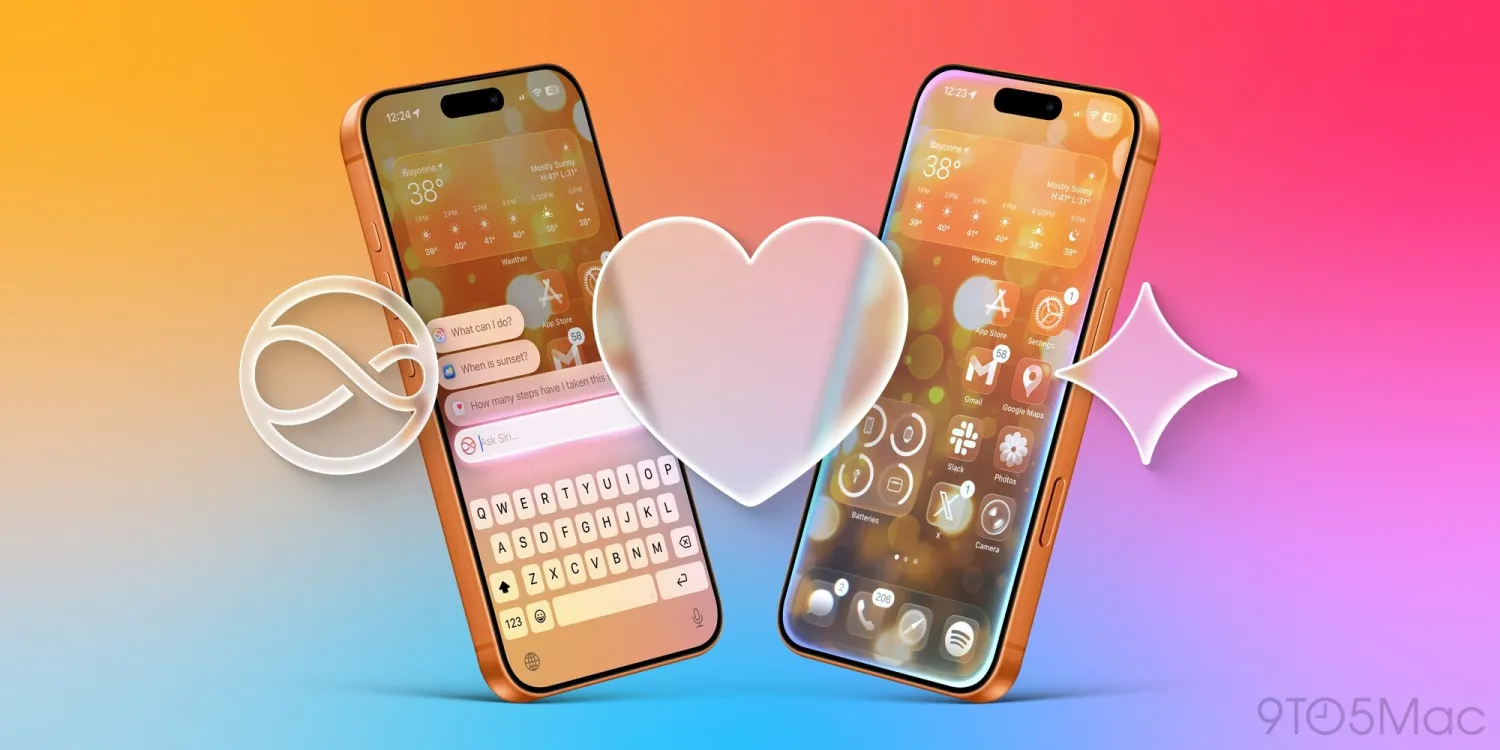
The Cupertino Capitulation: Why Apple’s Gemini Deal Is a Rescue Mission, Not a Partnership
Apple’s decision to outsource Siri's brain to Google Gemini marks a pivotal shift in Silicon Valley power dynamics. This analysis dissects why Cupertino capitulated, the privacy tightrope involved, and why this "partnership" is actually a frantic rescue mission for the iPhone's future.
The press release didn't land with a bang, but with a calculated, corporate whisper. On Monday, January 12, 2026, Apple and Google confirmed what the rumor mill had churned for months: a "multi-year collaboration" to power the next generation of Apple Intelligence.
If you read between the sanitized lines of the joint statement, the message is jarringly clear: Apple’s "Not Invented Here" culture just suffered its most significant defeat since the Intel switch in 2005. After years of struggling to make Siri conversational—and billions spent on internal projects like "Ajax"—Cupertino has effectively outsourced its cognitive engine to Mountain View.
While the tech press frames this as a "win-win" collaboration, the reality is starker. This isn't just a partnership; it is an infrastructure bailout.
The Engine Swap
The scope of this deal, as reported by 9to5Mac, is far broader than the "chatbot" integration we saw with OpenAI’s ChatGPT in iOS 18. That was an optional plugin; this is a foundation transplant.
According to the statement, the "next generation of Apple Foundation Models" will be based on Google’s Gemini models and cloud technology. This distinction is critical. Apple isn't just piping API calls to Google; it is building its proprietary "Apple Intelligence" stack on top of Google’s architecture.
The Breakdown:
- The Brain: The "more personalized Siri" arriving later this year will run on custom Gemini variants.
- The Metal: The deal explicitly references Google’s "cloud technology," implying Apple is leaning on Google’s TPU infrastructure to handle the heavy lifting that its own data centers can't yet manage at scale.
- The Breadth: This covers iPhone, iPad, Mac, and potentially the struggling Vision Pro, unifying the ecosystem under one borrowed brain.
This move signals that Apple’s internal LLM efforts were simply not ready for prime time. Facing a market that demands generative AI now, Tim Cook chose the only viable option: buy the best engine on the market and wrap it in an Apple chassis.
The Privacy Paradox
The most friction-heavy part of this alliance is privacy. Apple has spent a decade marketing itself as the anti-Google—the fortress of solitude for your data. Now, it must explain why sending queries to the world’s largest advertising company is safe.
The official line attempts to thread this needle. Apple asserts that "Apple Intelligence will continue to run on Apple devices and Private Cloud Compute," with Google merely providing the "underlying tech."
Here is the nuance:
- Data Segregation: Google allegedly has zero access to user data. The "custom Gemini models" likely run in a sandboxed environment—essentially a "Google Cloud Private" instance that Apple controls with cryptographic keys Google doesn't possess.
- The Branding Shell: To the user, it’s still "Siri" or "Apple Intelligence." The "Powered by Gemini" badge will likely remain buried in the settings, invisible to the average consumer who just wants their phone to summarize emails correctly.
This setup allows Apple to maintain its privacy marketing while utilizing Google’s raw compute power. It’s a high-wire act. If a single prompt leaks from this "Private Cloud" into Google’s ad-targeting algorithms, the brand damage will be catastrophic.
Why Google Took the Deal
For Sundar Pichai, this is a victory of distribution over branding. Google has struggled to get users to adopt Gemini as a daily habit on iOS, where Safari and Siri dominate entry points.
By powering Siri, Google instantly gains access to 2 billion active devices. They might not get the direct user data (allegedly), but they get the validation that their models are superior to OpenAI’s GPT-4. It cements Gemini as the "Android" of AI models—the ubiquitous infrastructure layer that powers the internet, regardless of the device you hold.
Furthermore, this neutralizes a threat. If Apple had managed to build a superior model in-house, Google’s search dominance on mobile would have faced its first existential crisis. Now, Google is getting paid to power its competitor.
The Contrarian Take: Apple Is Just Buying Time
While the market cheers this as a solution to Siri’s incompetence, the long-term reality is more complex. This deal is likely a stopgap, not a permanent marriage.
Apple hates dependency. They ditched PowerPC for Intel, then Intel for Apple Silicon. They are undoubtedly using this "multi-year" window to frantically retrain their own models (likely on the new M-series server chips).
The "future-looking" play here isn't the partnership; it’s the eventual breakup. Apple is using Gemini to train its users on how to use AI features. Once the user behavior is established and Apple’s internal "Ajax" models mature, they will likely swap the backend again, perhaps keeping Gemini only for the most complex, cloud-heavy queries.
We are watching a "Silicon Valley Truce." Apple needed a brain; Google needed a body. But make no mistake: Apple is already designing the replacement brain.
The Verdict
For the consumer, this is undeniably good news. Siri has been the dullest tool in the shed for a decade. Infusing it with Gemini-level reasoning capabilities finally fulfills the promise of the virtual assistant we were sold in 2011.
But for the industry, it marks the end of the "Apple Magic" myth—the idea that Cupertino does everything better alone. In the AI era, even the world’s most valuable company had to call for backup.
Prediction: By 2028, Apple will announce a "breakthrough" in on-device intelligence that reduces reliance on cloud providers, quietly phasing out Google’s role. Until then, your iPhone is effectively a Google Pixel in a tuxedo.
Stay informed
Get our latest articles delivered to your inbox.
Related Articles
britannica review
Is britannica worth visiting today? From addictive daily word games to verified historical deep-dives, read our full review of the modern encyclopedia.
The Honeymoon is Over: Threads Just Turned on the Money Printer
Did you really think Mark Zuckerberg was running a charity? Of course not.
Samsung’s Android XR Glasses 2026: 12MP Camera, Dual Models, and the Fight for Your Face
Samsung is finally entering the smart glasses arena in 2026. New leaks reveal the upcoming Android XR glasses will feature a 12MP camera, deep Gemini AI integration, and a dual-model strategy to rival Meta’s Ray-Bans. Here is everything we know about the specs, the "Pro" variant, and why this could be the ultimate Android accessory.
[modo.us] Review: Is It Actually Useful or Just Hype?
Is Modo.us the best new social casino or just another coin trap? We spent two weeks testing the "Live Dealer" tables and grinding daily bonuses to see if the payouts are real—and if the $100 cash-out limit is a dealbreaker for casual players.