The Arctic Checkmate: Why the U.S. is Finally Bankrolling Greenland’s Mines
The U.S. government is moving from passive observation to active intervention in the Arctic, with the Export-Import Bank signaling intent to finance Amaroq Minerals' operations in South Greenland. This strategic pivot aims to break China's stranglehold on critical mineral supply chains, but logistical hurdles and a lack of processing infrastructure remain critical challenges.
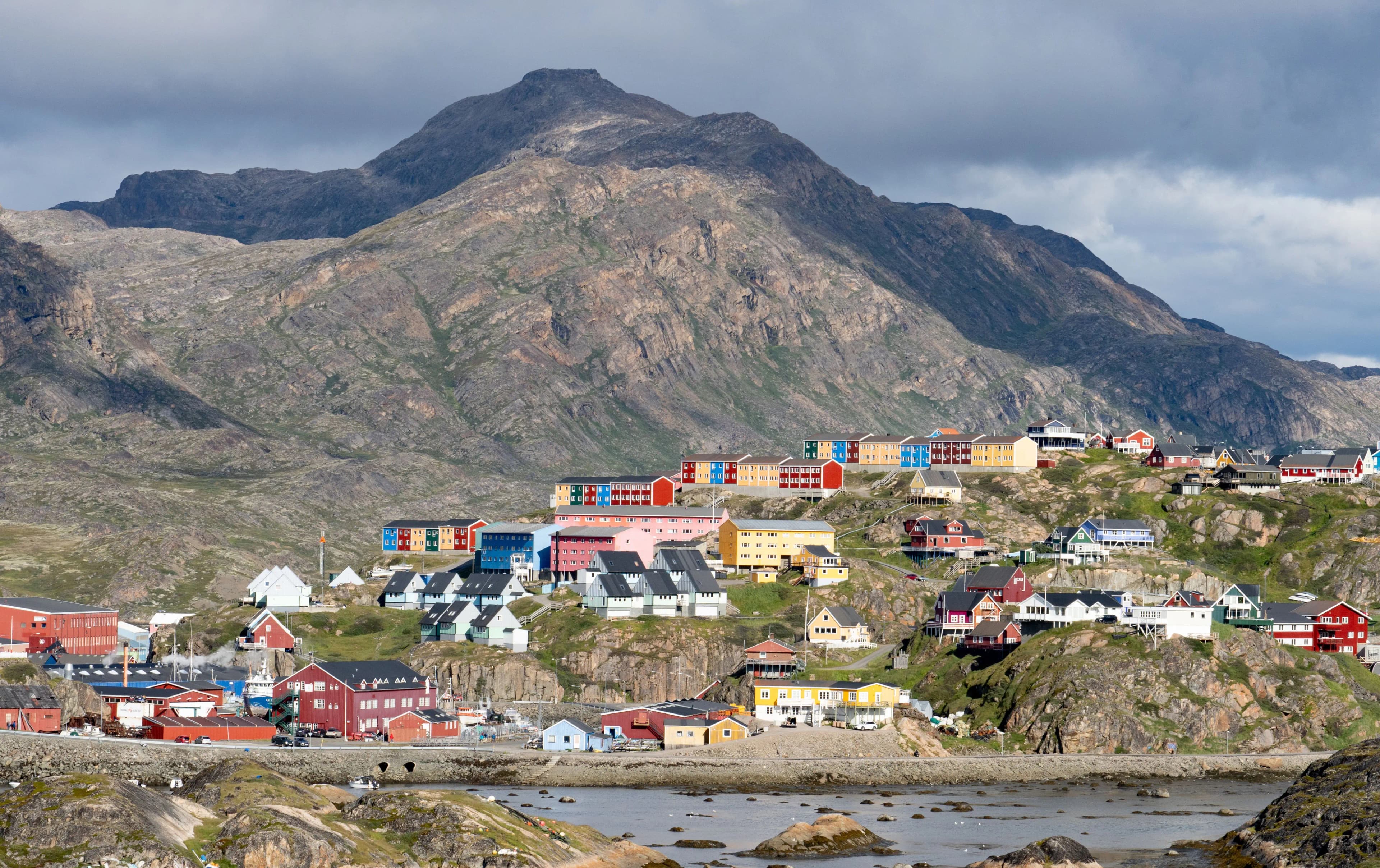
The era of passive diplomacy in the Arctic is over. For years, Washington viewed Greenland through a strategic lens focused solely on radar stations and airbases. But as the ink dries on a new letter of interest from the U.S. Export-Import Bank (EXIM), the strategy has shifted from surveillance to extraction.
Eldur Olafsson, CEO of Amaroq Minerals, confirmed on Thursday that his company is in advanced discussions with U.S. federal agencies to secure financing for its operations in South Greenland. Speaking to CNBC, Olafsson revealed that the U.S. government is no longer just watching the race for critical minerals; it is preparing to buy a seat at the table.
"The U.S. is looking to secure the supply chain," Olafsson stated, signaling a definitive move to counter China's monopoly on the metals that will power the next century of defense and energy infrastructure. This isn't just a mining deal. It is a geopolitical wedge driven into the ice.
The Capital Pivot: Washington Opens the Checkbook
The mechanism for this intervention is specific. The U.S. Export-Import Bank has issued a letter of interest for financing Amaroq’s ambitious projects. While not a finalized check, this document is the bureaucratic equivalent of a green light for institutional investors. It de-risks the project, signaling to the market that Uncle Sam is the guarantor of last resort.
This follows a distinct pattern of escalation. In recent months, Western powers have scrambled to secure non-Chinese sources of:
- Copper and Nickel: Essential for electrification and renewable energy storage.
- Rare Earth Elements: The backbone of F-35 fighter jets and guidance systems.
- Cobalt: Critical for EV battery chemistry.
Amaroq, a corporation listed in both Iceland and London (AIM: AMRQ), sits on a land package in South Greenland that covers 7,866.85 square kilometers. Their primary asset, the Nalunaq Gold Mine, is the cash engine intended to fund the exploration of these strategic metals.
By engaging with Amaroq, the U.S. is bypassing the slow, precarious route of domestic permitting reform in favor of a friendly, nearby jurisdiction. As Olafsson noted in his interview with CNBC, the company is "very happy" with the U.S. interest, framing it as a mutual necessity rather than a bailout.
The "Gardaq" Strategy: A Joint Venture for Influence
The structure of this engagement is not a direct takeover, but a strategic partnership. Amaroq has established a joint venture, Gardaq, specifically designed to handle the strategic mineral assets separately from its gold operations. This segmentation allows entities like the U.S. government to target their capital precisely where national security interests lie—in the strategic metals—without necessarily subsidizing the commercial gold mining side.
This mirrors the Department of Defense's aggressive posture elsewhere. The Pentagon has realized that supply chain security cannot be left to the free market alone, which often favors cheaper, Chinese-processed minerals.
The Math of Dependency:
- China currently processes roughly 60% of the world's lithium and 80% of its cobalt.
- The U.S. has virtually no domestic processing capacity for heavy rare earths.
- Greenland represents one of the largest undeveloped deposits of these materials in the NATO alliance.
The EXIM Bank's involvement suggests a financing package could reach into the hundreds of millions, provided Amaroq meets specific developmental milestones.
The Contrarian Take: The Infrastructure Trap
While the headlines celebrate the "security" of the supply chain, the reality on the ground in South Greenland is far less sterile.
The Logistics Reality Check: Everyone ignores the "Ice Cost." Mining in Greenland is not like mining in Nevada or Western Australia. There are no highways. Power grids are nonexistent. Every liter of diesel, every steel beam, and every worker must be shipped in and out of fjords that are ice-locked for parts of the year.
The capital expenditure (CAPEX) required to build a mine in the Arctic is often 2-3x higher than in temperate zones. While the U.S. government can provide debt financing, they cannot change the weather.
Furthermore, the "China alternative" narrative glosses over the processing bottleneck. Amaroq can dig the ore out of the ground, but where will it go? Currently, the vast majority of global refining capacity still resides in China. Unless the U.S. funding includes provisions for refining infrastructure—either in Greenland or North America—we are simply shipping American-financed ore to Chinese smelters.
The real story isn't the mine; it's the missing midstream. Without a parallel investment in processing, this is a bridge to nowhere.
Conclusion: The First Move in a Long Game
The U.S. interest in Amaroq Minerals is a signal flare. It proves that Washington has accepted a new economic reality: security costs money. The free market, left to its own devices, will always choose the cheapest supplier. But the cheapest supplier is no longer politically viable.
As 2026 unfolds, expect to see more of these "letters of interest" converting into hard currency. The U.S. is no longer just asking companies to de-risk; they are paying them to do it. The frozen hills of South Greenland are no longer just geology; they are the collateral in a global struggle for industrial survival.
For investors and policymakers, the lesson is clear: The most valuable commodity in the next decade won't just be the metal itself, but the passport of the company that digs it up.
Stay informed
Get our latest articles delivered to your inbox.
Related Articles
Artemis II Explained: Why NASA’s Next Moon Mission Won't Touch the Lunar Surface
Discover why NASA is choosing a flyby over a landing and how this high-stakes test drive paves the way for a permanent lunar presence.
Audio’s Red Carpet Moment: The Golden Globes Finally Bend the Knee to Podcasting
The Golden Globes have finally added a podcast category, signaling a massive shift in Hollywood's hierarchy. Here is why this isn't just about trophies—it's about the industry's obsession with audio IP as the new gold rush.
The Caliphate Ghost: Why the US Just Dropped 40 Tons of Ordnance on a "Defeated" Enemy
The US military's latest airstrikes in Syria aren't just about neutralizing ISIS remnants—they expose a fragile containment strategy teetering on the edge of failure. Here is why Washington is still dropping bombs on a "defeated" enemy seven years later.
The Man Who Skated Through the Apocalypse: Why T.K. Carter Mattered
T.K. Carter, best known as the boombox-toting Nauls in John Carpenter’s sci-fi classic The Thing, has died at 69. A career chameleon who moved effortlessly between sitcom warmth and gritty drama, Carter defied the "expendable" tropes of 80s horror to leave an indelible mark on Hollywood history.