Trump’s Venezuelan Gambit: The End of Isolationism and a Shock to the MAGA Core
President Trump’s midnight raid to capture Nicolas Maduro and "run" Venezuela marks a stunning reversal of his isolationist "America First" promise. This analysis dives into the political fallout, the gamble for oil reserves, and why this "Neo-Monroe Doctrine" threatens to fracture the MAGA movement ahead of the midterms.
The "America First" doctrine just got a radical rewrite, and not everyone in the movement is reading from the same page.
It was a scene straight out of a Hollywood thriller, yet it played out on the global stage with very real consequences. On January 3, 2026, the world watched as U.S. forces executed a lightning-fast strike in Caracas, capturing Venezuelan President Nicolas Maduro and his wife, Cilia Flores. But the real shockwave wasn’t just the operation itself—it was the man who ordered it. Donald Trump, the president who spent years railing against "forever wars" and foreign entanglements, is now preparing to run Venezuela until a "proper transition" can be secured.
For the MAGA faithful who voted for a withdrawal from the world stage, this weekend’s events are more than a surprise; they are a seismic shift in ideology. The arrest of a foreign head of state and the commitment to potentially put "boots on the ground" suggests that the second term of the Trump presidency is steering the ship of state into waters the original MAGA movement explicitly promised to avoid.
The Midnight Raid That Changed Everything
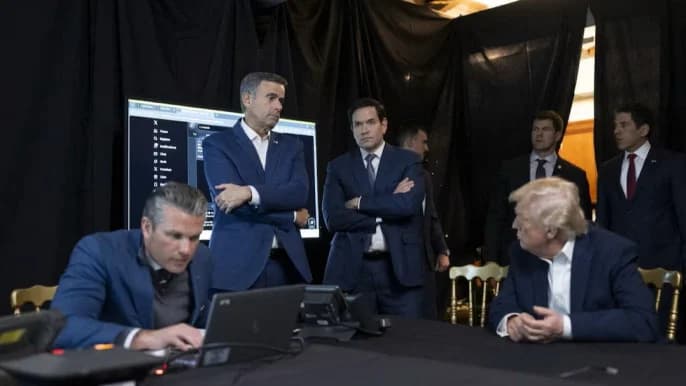
The details of the operation are stark and aggressive. From his command center at Mar-a-Lago, flanked by Secretary of State Marco Rubio and Defense Secretary Pete Hegseth, President Trump oversaw an operation that decapitated the Venezuelan leadership in a single night.
- The Target: Nicolas Maduro, long deemed an illegitimate dictator by the West, now faces drug-trafficking charges in New York.
- The Plan: Trump declared that the U.S. will "run the country" temporarily. This isn't just a surgical strike; it’s an occupation in all but name, aimed at ensuring a "safe, proper, and judicious transition."
- The Scope: The President has left the door wide open for prolonged military involvement, signaling that U.S. forces will remain until all demands are met.
This isn't the isolationist Donald Trump of 2016. This is a president wielding American military power with the assertiveness of the neoconservatives he once despised. The operation in Caracas follows a year of escalating kinetic actions—from bombings in the Middle East and Africa to veiled threats against Greenland and Panama. The trendline is clear: Intervention is back.
A Fracture in the MAGA Foundation
The political fallout within the Republican party has been immediate and visceral. For years, the "America First" brand was synonymous with bringing troops home and focusing on domestic issues like the border and the economy. This weekend, that definition fractured.
The Loyalists vs. The Purists On one side, you have figures like Marco Rubio, now the Secretary of State, who has long championed a hawkish stance on Latin America. For this wing of the party, removing a socialist dictator and securing the Western Hemisphere is the ultimate expression of American strength.
On the other side, the betrayal is palpable. Marjorie Taylor Greene, a standard-bearer for the isolationist MAGA base, announced her resignation from Congress in protest. Her parting words on social media captured the disillusionment of many: "This is what many in MAGA thought they voted to end. Boy were we wrong."
Representative Thomas Massie echoed these sentiments, questioning the constitutionality of the strike and pointing out the irony of using a 1934 firearm law to arrest a foreign president. The internal GOP debate is no longer about how to implement "America First," but what the phrase actually means.
Redefining "America First": Resources Over Retreat?
President Trump defended the operation by reframing his doctrine. In his view, "America First" doesn't mean "America Alone"—it means "America Secure."
"We want to surround ourselves with good neighbors. We want to surround ourselves with stability. We want to surround ourselves with energy." — President Donald Trump
This pivot is crucial. By linking the intervention to energy security, Trump is attempting to bridge the gap between his isolationist promises and his interventionist actions. The logic is transactional: Venezuela has the world's largest proven oil reserves. Stabilizing the country and installing a friendly government could theoretically flood the market with cheap oil, driving down prices for American consumers—a core domestic promise.
However, the "resource realism" argument is a high-stakes gamble. It requires the base to accept that military adventurism is acceptable if the prize is economic gain. It transforms the moral argument of non-interventionism into a pragmatic argument about Return on Investment (ROI).
The Oil Imperative
The economic angle cannot be overstated. Trump has explicitly stated that U.S. oil giants—the likes of Exxon Mobil and Chevron—are preparing to "spend billions" to rehabilitate Venezuela’s crumbling infrastructure.
- The Challenge: Venezuela's oil sector is decimated. Analysts estimate it will take tens of billions of dollars and at least a decade to turn the industry around.
- The Opportunity: If successful, U.S. control over Venezuelan production could solidify American energy dominance for a generation.
- The Reality: "Boots on the ground" to protect oil fields sounds suspiciously like the very nation-building exercises Trump ridiculed in Iraq.
The Historical Echo: Shadows of Reagan and Bush
History rhymes, and Trump’s latest move has a familiar cadence. While he positions himself as an anti-establishment disruptor, this operation aligns him closely with the establishment Republican presidents of the late 20th century.
- Grenada (1983): Ronald Reagan invaded to depose a Marxist government and protect American students.
- Panama (1989): George H.W. Bush invaded to depose Manuel Noriega, a dictator facing U.S. drug charges.
In both cases, the U.S. claimed the moral high ground, removed a hostile leader, and engaged in varying degrees of nation-building. Trump’s removal of Maduro is a direct successor to these operations. It suggests that despite the rhetoric, the geopolitical DNA of the Republican party—the impulse to police the Western Hemisphere—remains dominant.
Expert Perspective: The "Neo-Monroe Doctrine"
Here is the bottom line that most analysts are missing: This isn't a flip-flop; it's an evolution toward a "Neo-Monroe Doctrine."
The original Monroe Doctrine warned European powers to stay out of the Americas. Trump’s version seems to be that the Americas are the exclusive backyard of the United States, and we reserve the right to "clean house" whenever stability or profits are threatened.
Unlike the "Global Policeman" role of the Bush/Cheney era, which sought to spread democracy in the Middle East, Trump’s interventionism appears strictly regional and transactional. He isn't trying to fix the world; he's trying to secure the neighborhood. This distinction matters. It implies that while we might see a withdrawal from NATO or Asian commitments, we could see an increase in aggressive actions in Latin America and the Caribbean.
The risks, however, are astronomical.
- The Quagmire: As Elliott Abrams noted, "I don't know what running Venezuela means." Transitions are messy. Insurgencies are likely. If U.S. troops start dying in Caracas, the political calculus changes overnight.
- The Midterms: With Republicans holding a razor-thin majority, a protracted conflict could be a gift to Democrats in November. Chuck Schumer is already branding the move "reckless."
- The Base: Alienating the libertarian/isolationist wing of the GOP could depress turnout, proving that in politics, your greatest strength (the base) can quickly become your greatest vulnerability.
Conclusion: A New Era of Intervention?
As the dust settles in Caracas and the political firestorm ignites in Washington, one thing is clear: The era of MAGA isolationism is effectively over. It has been replaced by a muscular, resource-driven interventionism that prizes American hegemony in the Western Hemisphere above all else.
President Trump has placed a massive bet. He is wagering that the promise of cheap oil and regional stability will outweigh the broken promise of non-intervention. Whether this gamble pays off—or leads the U.S. into another generational quagmire—will define his legacy and the future of the American Right.
Stay informed
Get our latest articles delivered to your inbox.
Related Articles
Inside Elon Musk’s $134 Billion Invoice to OpenAI
Elon Musk has escalated his legal war against OpenAI, filing a demand for $134 billion in "wrongful gains" from the AI giant and its backer, Microsoft.
Trump Threatens Tariffs on Nations That Resist His Greenland Push
Trump threatened tariffs on countries that resist U.S. demands over Greenland, signaling a shift from trade policy to geopolitical coercion. Allies in Denmark and Congress push back, warning that economic pressure could fracture NATO and reshape Arctic strategy.
UK Marketing Budgets Flat in Q4 2025: IPA Bellwether Report
The numbers didn’t just slow down. They stopped.
Stop Overpaying Your Accountant: The Strategic Case for Algorithmic Tax Filing
Stop paying the "vanity accountant" tax. We analyze why smart investors are switching to H&R Block Deluxe for the 2026 tax season—and how a limited-time $30 deal makes the ROI undeniable.